In fast-growing teams, scaling workflows and maintaining alignment can quickly become a challenge. Gaps in knowledge, inconsistent documentation, and unclear collaboration processes often lead to errors, delays, and inefficiencies. This slows progress and prevents teams from delivering their best work.

My Role
With a focus on scalability and collaboration, I designed frameworks, workflows, and onboarding programs to close gaps, reduce errors, and streamline how teams work together. My approach combines hands-on tools with clear processes to drive immediate impact while supporting long-term growth.
⏳ Timeline: 2023/2024
🔧 Tools: Figma, FigJam, Jira, Confluence
Branched Workflow for Design System Contributions
Challenge: Designers needed a structured way to contribute safely to the library without risking errors or breaking components.
Solution:
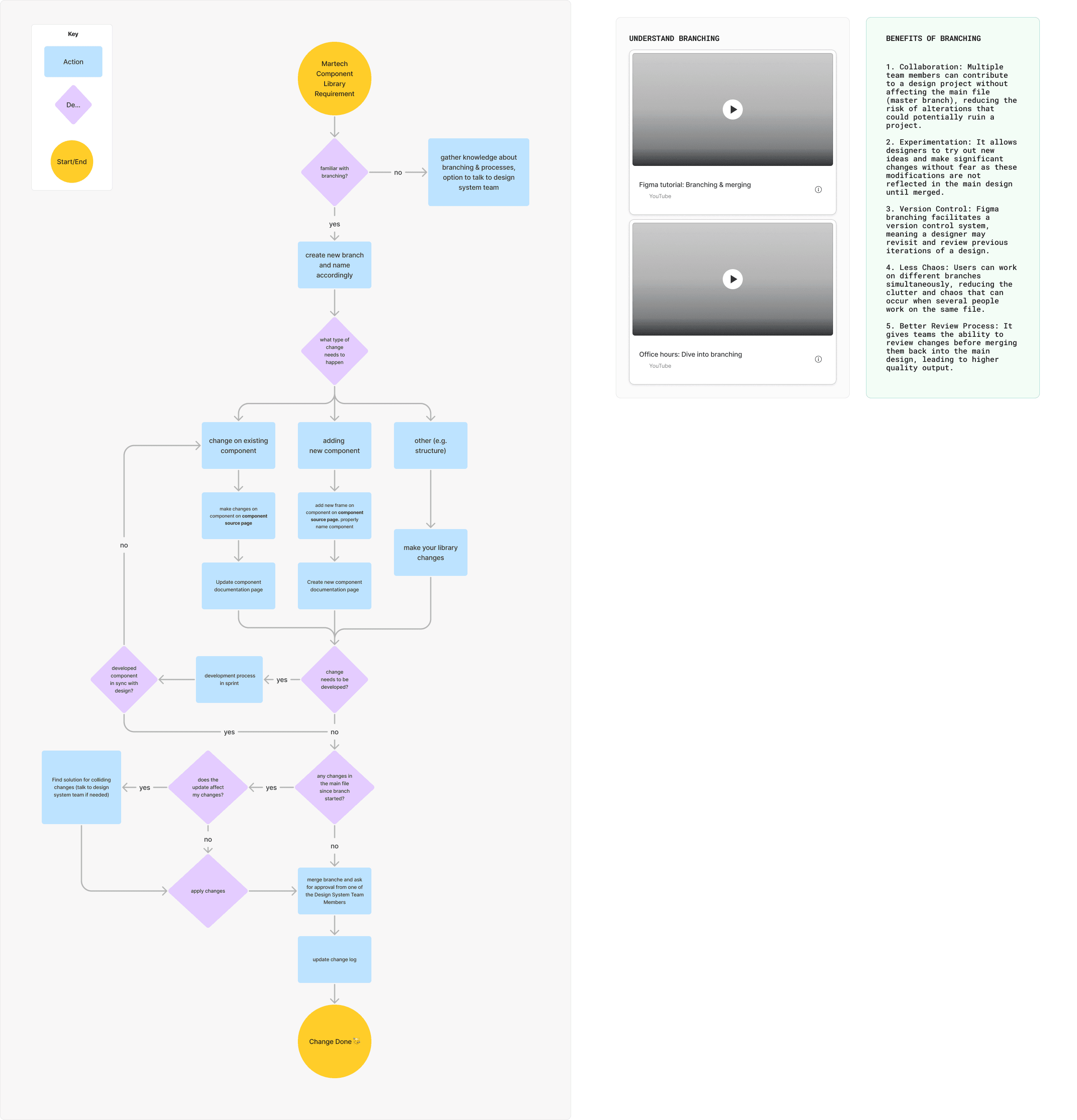
• Introduced a new workflow using branches in Figma, for in-file editing, enabling designers to collaborate safely without affecting the main library.
• Created a flowchart for Figma branching in our library to streamline adoption.
• Provided resources to support designers new to branch based workflows.
Design System Onboarding
Challenge:
Varying skill levels with the design system slowed adoption, caused errors, and impacted collaboration.
Solution:
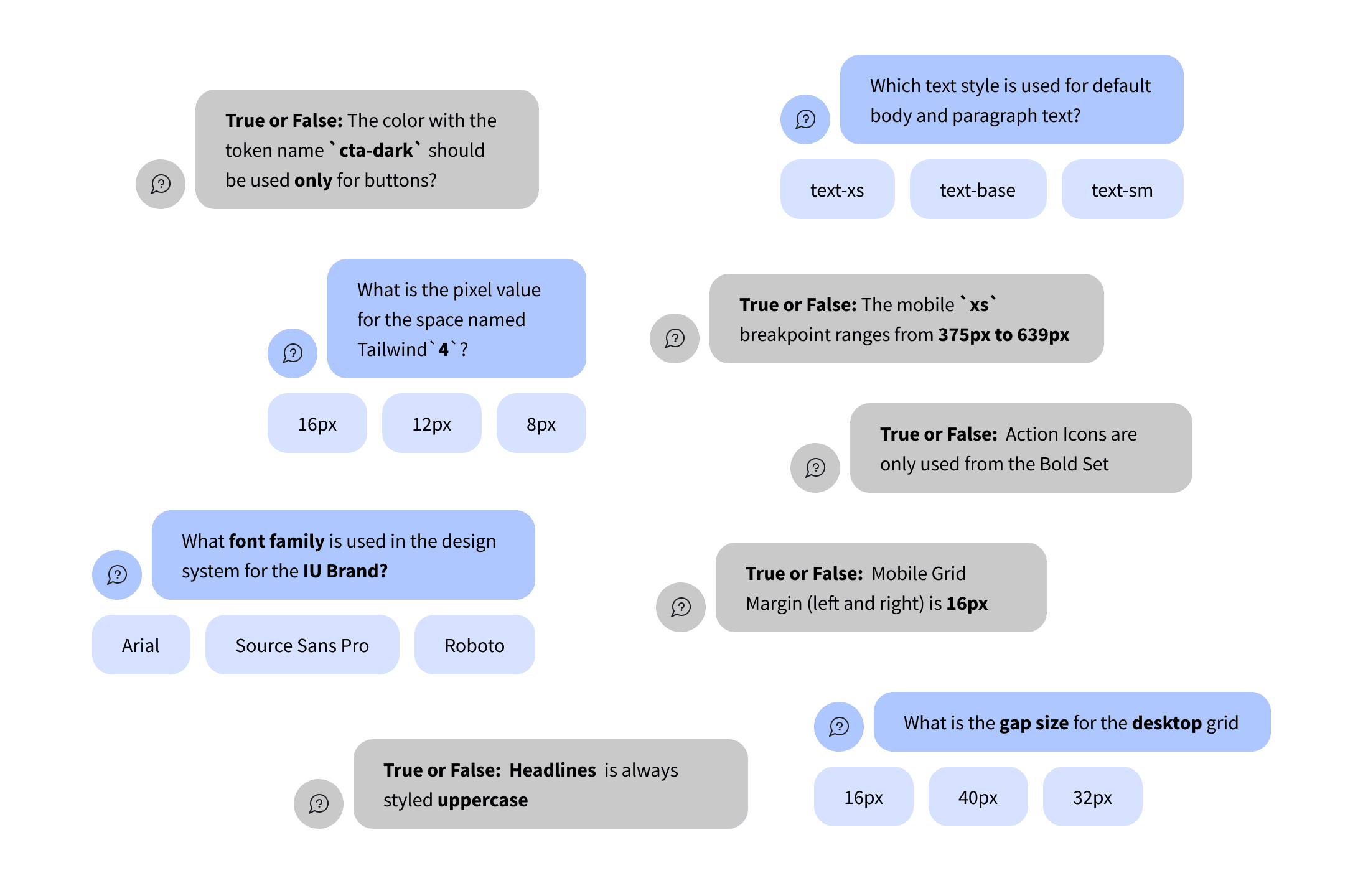
• I Built a self-paced onboarding program in Figma using an interactive playground format familiar to designers.
• Quizzes, and tasks covered foundations, auto-layout, naming conventions, properties and more.
• Flexible, hands-on exercises to ensure consistent system knowledge across teams.
FigJam Framework for QA Collaboration
Challenge:
QA reviews were disorganized and feedback was scattered across ticket comments, causing missed issues and delays.
Solution:

• Developed a FigJam framework with structured sections for QA tracking, priorities, and developer feedback.
• Introduced color-coded priorities and checklists to centralize reviews and streamline processes.
• Made it visual and easy-to-use, aligning stakeholders and reducing confusion.
🔥 With these improvements, I transformed team workflows, enabling better collaboration and faster delivery:
• Reduced Errors – Clear workflows and documentation minimized inconsistencies.
• Faster Adoption – Hands-on onboarding accelerated learning and system usage.
• Streamlined QA – Standardized processes simplified feedback tracking and prioritization.
• Empowered Teams – Enabled teams to focus on building features, not fixing issues.
💡 Key Takeaway:
I’m passionate about identifying inefficiencies and designing scalable workflows. This case study reflects how that focus empowered teams to work more efficiently, reduce errors, and deliver meaningful results faster.